
After a breakup, the no contact rule often sounds straightforward: stop reaching out to your ex, stop checking up on them, and create enough distance to heal.
The problem is that following the no contact rule can feel completely different from understanding it. You may find yourself checking your ex's profile without thinking, replaying old conversations, or wondering whether one message would really make a difference. Even when you know those things leave you feeling worse, the urge can be difficult to ignore.
That's because a breakup doesn't only end a relationship. It also leaves behind habits, routines, and emotional attachments that take time to let go of.
Why Moving On Takes Time
Many people feel frustrated by how long it takes to move on after a breakup. The relationship is over, yet thoughts about an ex can still show up unexpectedly weeks or months later.
Research suggests there may be a reason heartbreak feels so intense. In a study, people who had recently gone through an unwanted breakup were asked to look at photos of their ex while thinking about the rejection. Researchers found that the experience activated some of the same brain regions involved in physical pain.
The findings help explain why heartbreak can feel so consuming. The pain of losing someone you cared about isn't "all in your head" or something you should be able to switch off. For many people, a breakup can feel emotionally and physically draining, which is why moving on often takes more time than expected.
Why Social Media Can Make the No Contact Rule More Difficult
Many people follow the no contact rule while still checking their ex's social media.
They look at stories, scroll through photos, notice new followers, and search for clues about what's happening in their ex's life. Because there is no conversation taking place, these behaviors can feel relatively harmless. In reality, they often keep the breakup emotionally active.
A quick check can easily turn into:
Wondering whether your ex has moved on
Looking for signs that they still care
Comparing their apparent happiness to your own
Analyzing photos, captions, and interactions
Spending hours thinking about information that changed nothing
Social media provides access to someone's life without providing the context behind it. A single photo can trigger assumptions, comparisons, and questions that have no clear answers. Instead of creating clarity, the experience often creates more uncertainty.
Research supports this. A study found that people who monitored an ex-partner on Facebook more frequently reported greater distress, stronger longing for their ex, and more difficulty moving on after the breakup. Study:
The findings highlight a common trap after a breakup: looking for relief in places that tend to create more emotional attachment. Every update can feel meaningful in the moment, but it often leaves people feeling more preoccupied with their ex than before.
Why Good Memories Feel Stronger After a Breakup
Many people are surprised by how quickly their perspective on the relationship changes after a breakup.
Things that felt frustrating, confusing, or emotionally exhausting during the relationship can suddenly seem less important. At the same time, specific memories start taking up more space: the conversations that lasted for hours, the moments of affection, the trips, the routines, and the feeling of having someone there.
This can create a difficult situation. You're no longer comparing the relationship to how it actually felt day-to-day. You're comparing your current loneliness to the relationship's best moments.
Research suggests this tendency is common. Psychologists use the term rosy retrospection to describe how people often remember past experiences more positively than they experienced them at the time.
After a breakup, that can look like:
Remembering the good weekends but not the arguments that followed
Missing the connection while overlooking the inconsistency
Focusing on how much you loved them while forgetting how often you felt hurt, anxious, or disappointed
Thinking about your ex at their best rather than how the relationship felt most of the time
The good memories are real. The problem is that they're only part of the story. The no contact rule becomes much harder when you're comparing your present reality to a carefully edited version of the past.
Why Most People Struggle With No Contact
People often treat no contact like a test of discipline. The assumption is that if you want to heal badly enough, you'll simply stop checking, stop reaching out, and move forward.
If it were that simple, far fewer people would struggle with it.
Breaking no contact usually doesn't begin with a major decision. It starts with a thought that feels reasonable in the moment:
"I just want to see how they're doing."
"Maybe one conversation would help."
"I need answers so I can move on."
"I just miss them."
The urge can be surprisingly convincing because it speaks directly to what hurts. Loneliness makes you want connection. Uncertainty makes you want answers. Missing your ex makes you want contact.
Reaching out can feel like a way to relieve those feelings. For a moment, it might. But temporary relief often comes at the cost of reopening emotions that were beginning to settle. A message, profile check, or brief conversation can quickly lead back to overthinking, disappointment, and renewed attachment.
This is why the no contact rule can feel so challenging. Healing requires learning how to live with difficult emotions for a while instead of immediately trying to escape them through contact with an ex.
How a Breakup Recovery App Can Help
Most people know what a fitness app does. They know what a meditation app does. What many people don't realize is that breakup recovery apps exist, too.
After a breakup, most people are left to figure things out on their own. They read articles, watch videos, talk to friends, and try to stay busy. While those things can help, they don't always address the day-to-day reality of heartbreak: the overthinking, the intrusive thoughts, the urge to check social media, the loneliness, and the constant replaying of what happened.
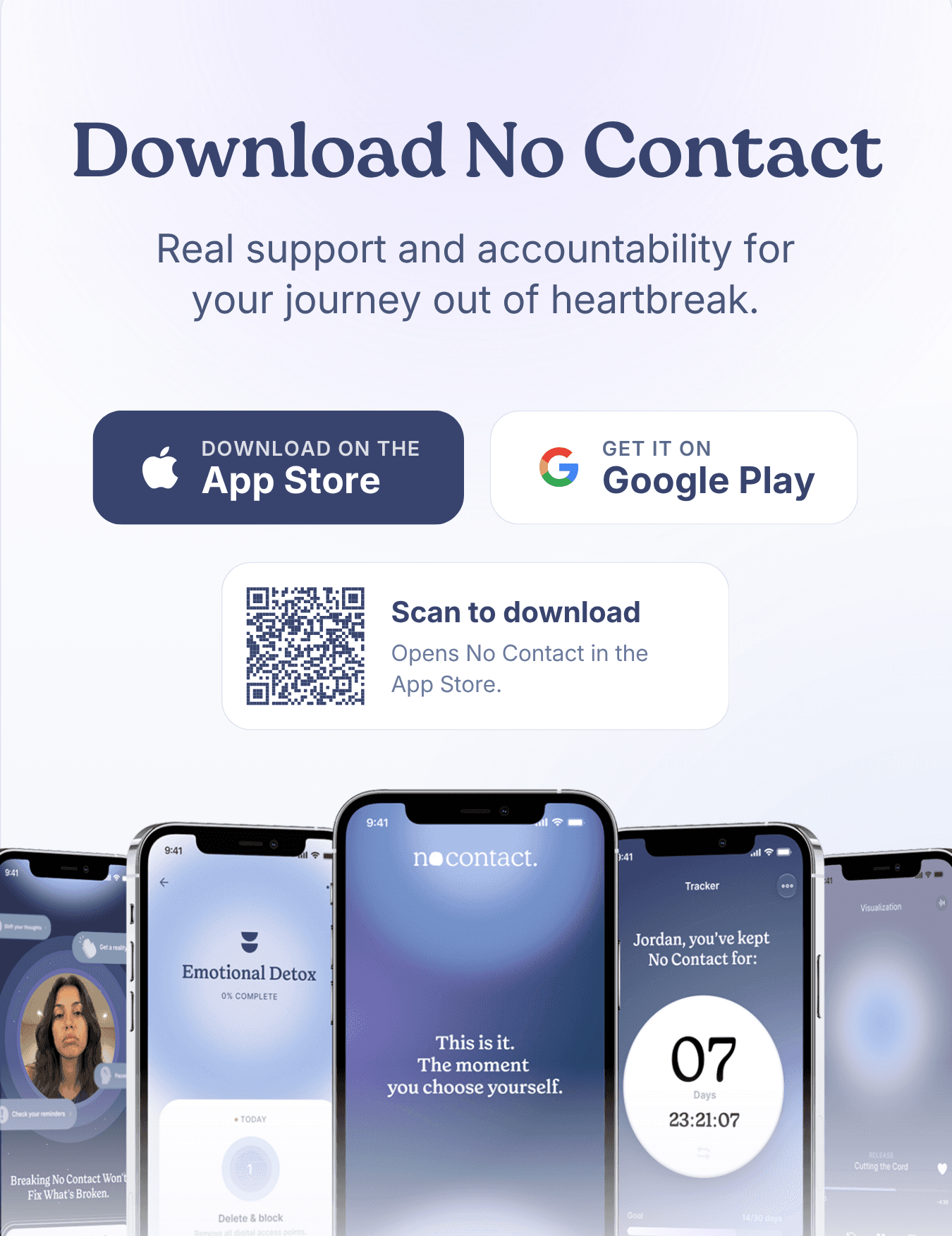
The No Contact app is built specifically for people navigating those experiences. Instead of offering generic advice, it provides tools that help users stay consistent with no contact, process difficult emotions, and focus on healing.
By using a breakup recovery app, you can:
Stay Consistent With the No Contact Rule
The No Contact Tracker helps users track their streak, complete daily check-ins, and unlock healing milestones over time. Recovery can feel difficult to measure, especially when progress happens gradually. By making progress visible, the tracker helps users stay committed to the goals they've set for themselves and recognize how far they've already come.
Manage Difficult Emotions More Effectively
The app's Panic Room provides a collection of tools designed to help users work through difficult emotions without acting impulsively.
Users can:
Use Reality Check to revisit why the relationship ended
Open the Chat Simulator to write messages that never get sent
Use Pause & Recenter exercises for grounding
Revisit the Evidence Vault when perspective starts slipping
Journal thoughts and emotions privately
Together, these tools help create a pause between an emotion and a reaction, making it easier to respond intentionally rather than impulsively.
Express Yourself Without Reopening Contact
Many people carry thoughts, questions, and emotions they never had the chance to express. The app's Write My Ex feature provides a private space to put those thoughts into words without sending a message. It allows users to process emotions and release mental clutter without creating new complications or setbacks.
Get Support and Perspective When You Need It
The app includes Kai, an AI breakup coach that helps users process what they're feeling and gain perspective on difficult situations. Users can choose Empathy Mode for emotional support or Tough Love Mode for more direct guidance when they need help challenging unhelpful thought patterns.
Maintain a Balanced View of the Relationship
The Evidence Vault helps users save reminders of unhealthy patterns, red flags, screenshots, and personal reflections. Having those reminders available can make it easier to view the relationship more objectively and stay connected to the reasons no contact was necessary in the first place.
Focus on Long-Term Healing
The app includes guided programs such as Emotional Detox, Self-Love, and Inner Child Healing, along with features like Healing Insights, Message Analyzer, Guided Visualizations, Abuse Awareness resources, and a community of people navigating similar experiences.
Give Yourself the Space to Heal
After a breakup, it's easy to feel pressure to have everything figured out. You want to stop thinking about your ex, stop feeling sad, and get back to being yourself as quickly as possible. When that doesn't happen, many people start wondering whether they're healing the "right" way.
The reality is that recovery doesn't follow a schedule. Some parts of the breakup may make sense immediately. Other parts may take much longer to process. Giving yourself space to heal means allowing that process to unfold without constantly judging where you should be by now.
The no contact rule creates room for that adjustment to happen. Over time, the relationship takes up less space in your daily life. That space can gradually be filled with new routines, new experiences, and a stronger sense of who you are outside of the relationship.
Ready to navigate breakup recovery one day at a time? Download the No Contact app today.